What Is Hydro Excavation?
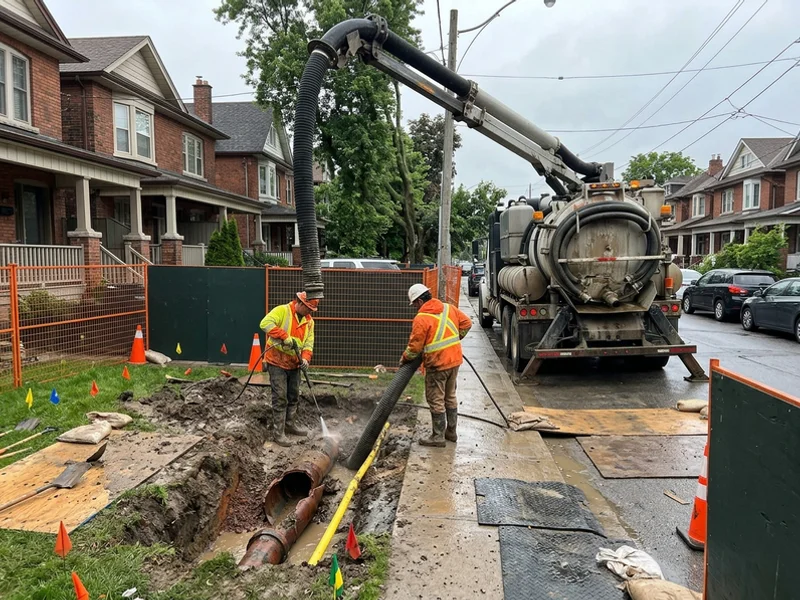
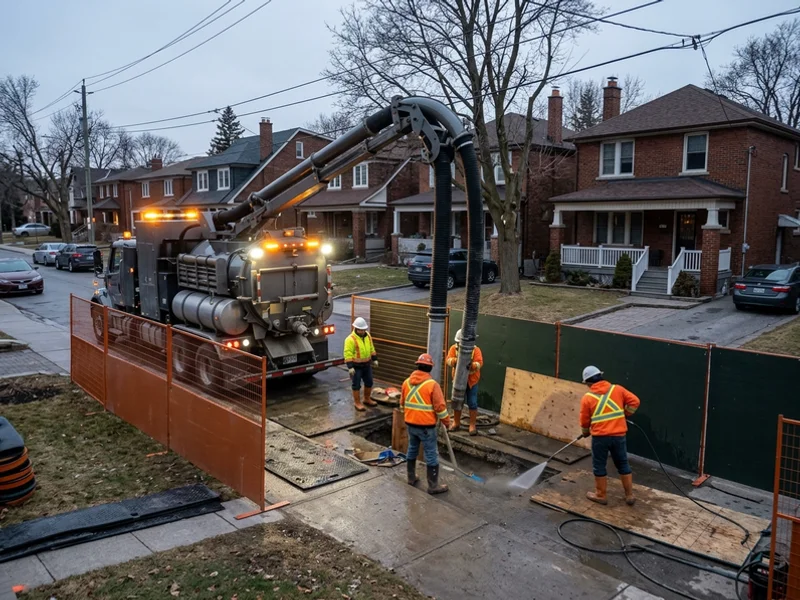
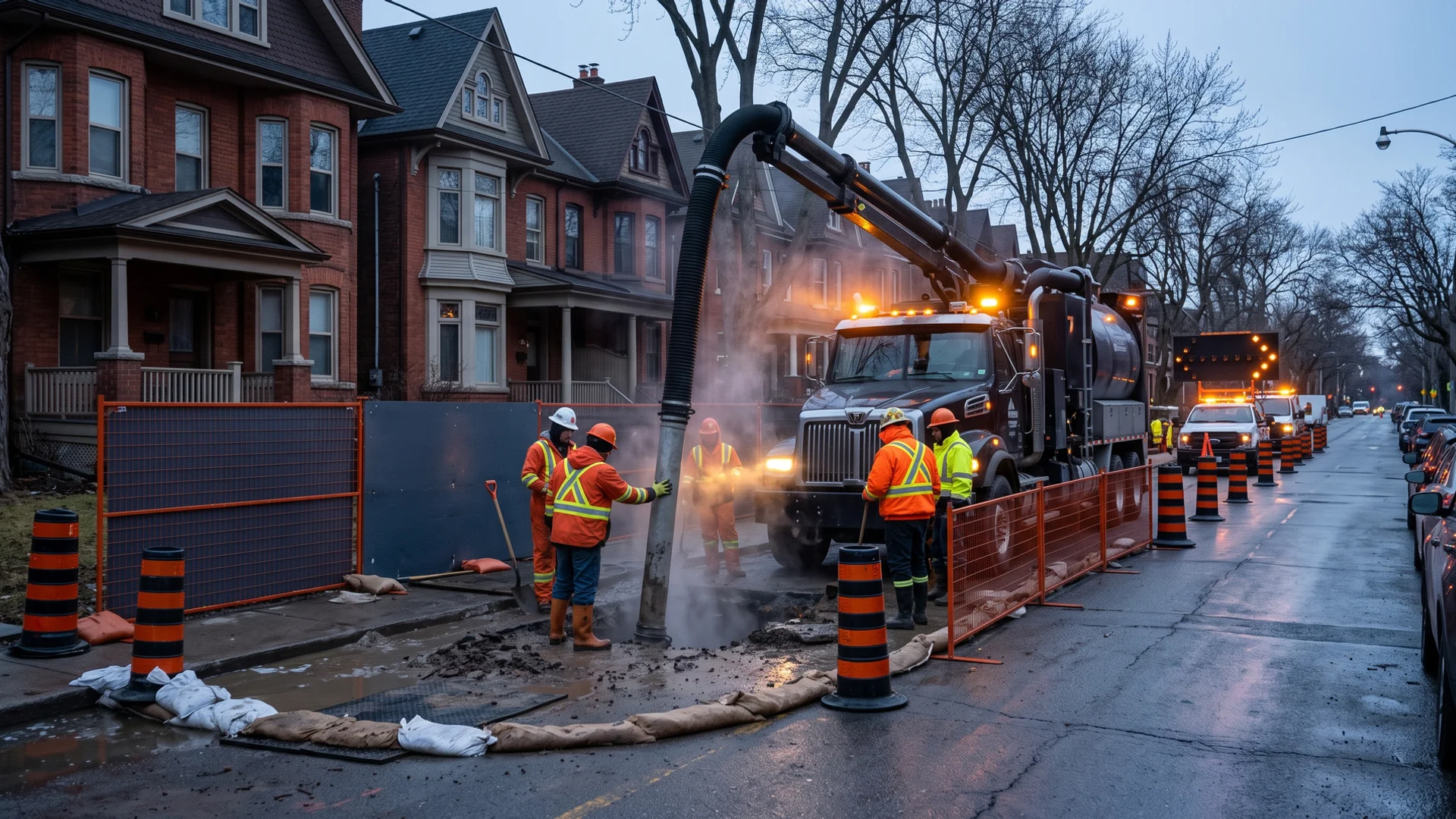
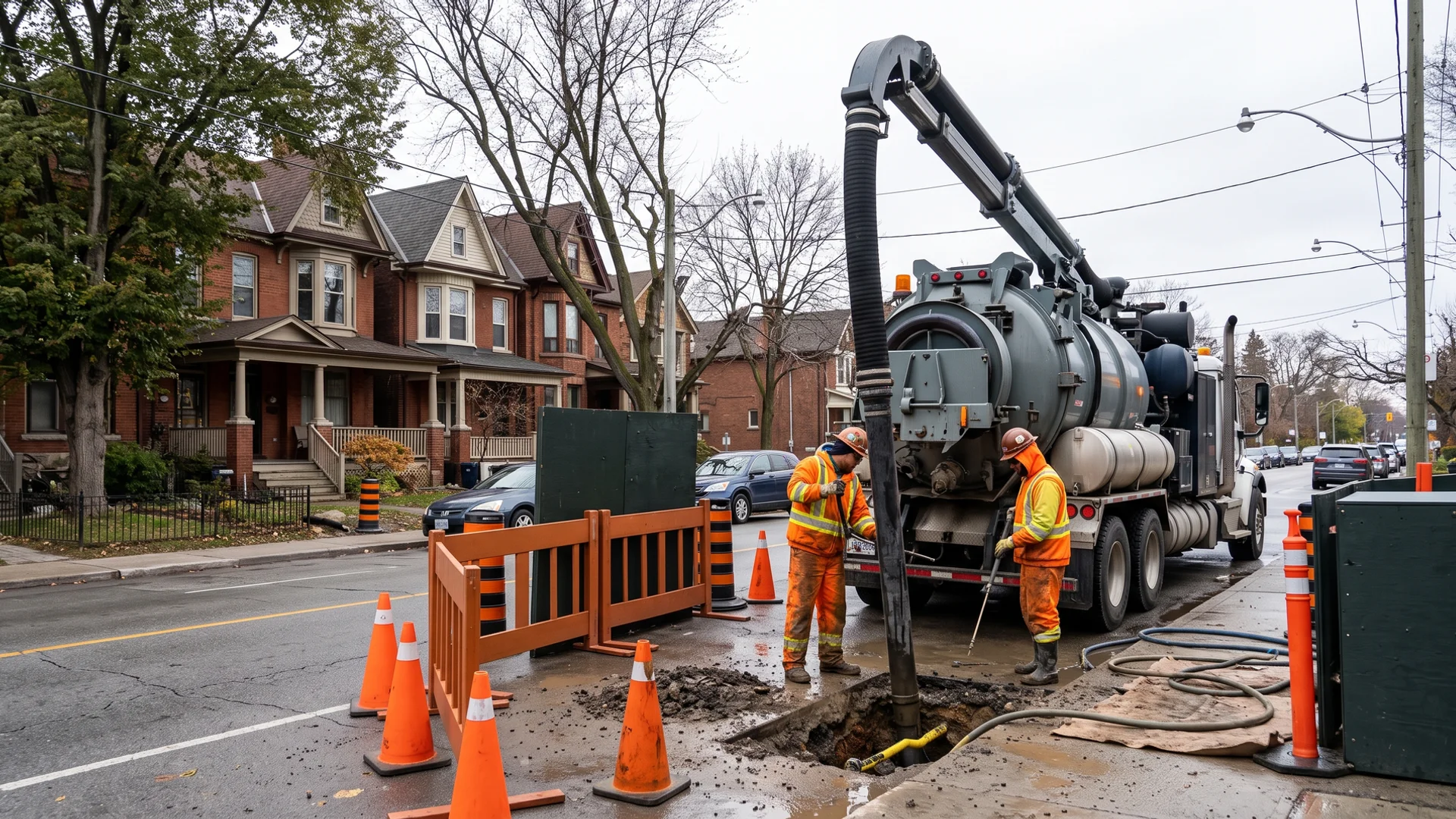
Hydro excavation, or hydrovac, is a non-destructive way to dig. A wand delivers pressurized water that breaks up the soil, and a vacuum hose lifts the resulting slurry into a tank on the truck. Nothing hard touches the ground, so buried gas mains, hydro cables, water pipes and telecom lines can be exposed without being damaged.
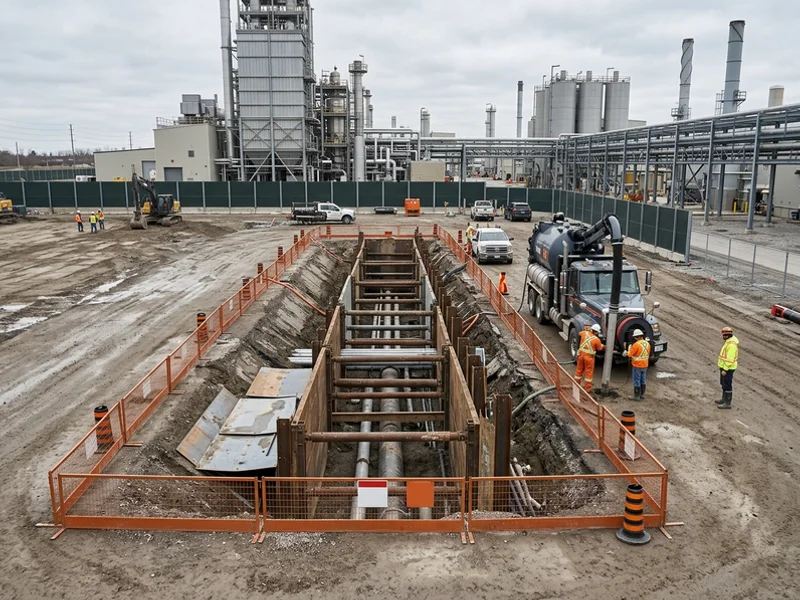
We own a hydrovac truck and run it on every major job we do, before underpinning, foundation digs, industrial trenching and sewer repairs. Contractors, landscapers, utility firms and property managers also hire it for their own work.
Why Locate Marks Are Not Enough
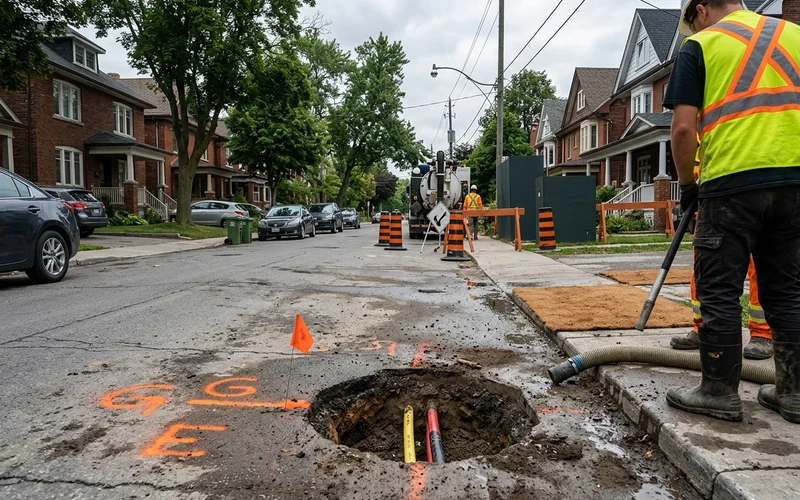
Before any dig in Ontario, you must request locates through Ontario One Call. Each utility sends a locator who marks the approximate path of its lines with paint and flags. Those marks are helpful, but they have limits:
- Marks show approximate horizontal position, within a tolerance zone, not depth.
- Old records, bends and shallow lines mean the real position can be off by a metre or more.
- Private lines, such as a feed to a garage, an irrigation main or a private storm line, are not marked by the utilities at all.
Daylighting closes the gap. A small hydrovac hole at each crossing shows exactly where and how deep the line is, so the excavator operator knows what is under the bucket.
What We Use Hydrovac For
Utility daylighting
Exposing lines at every point where a planned excavation crosses or runs close to them. Standard before our underpinning, dig-outs and foundation work.
Potholing
Small test holes to confirm depth and position for designers, utilities and contractors planning new work.
Slot trenching
Narrow, clean trenches for new conduit, cable or small pipe, cut without damaging existing lines.
Emergency exposure
Finding and exposing a watermain break or a collapsed sewer lateral safely, often beside a gas line. See sewer and watermain.
Digging around roots
Exposing tree roots for arborists or near protected trees, without tearing them.
| Use | Typical time | Who usually hires it |
|---|---|---|
| Daylighting crossings before a dig | 2-4 hours | Builders, homeowners, our own crews |
| Potholing for design | Half to full day | Engineers, utility contractors |
| Slot trench for conduit | 1-2 days | Electrical and telecom contractors |
| Emergency break exposure | Hours | Property managers, homeowners |
| Root exposure | 2-6 hours | Arborists, landscapers |
The Cost of Not Daylighting
A strike on a gas line means evacuating the area, emergency repair by the utility, fines and liability for damage, with total costs often between $15K and $120K. A cut hydro or fibre line causes outages and similar bills. These are the most common reasons Toronto excavation projects stall, and they are entirely avoidable. On our East York job, a collapsed sewer lateral sat within a hand-width of an Enbridge gas service; hydrovac exposed both and the lateral was replaced without a scratch on the gas pipe.
Disposal and Winter Work
Hydrovac slurry is waste and must go to a licensed disposal facility, not a storm drain or the back of the lot. We handle disposal and keep the records. In winter, our unit uses heated water to cut through frozen ground, so daylighting and emergency work continue year-round.
Book the Hydrovac
Whether you need daylighting before your own dig or exposure of a break right now, request a visit or call (647) 277-2002. If you are planning a bigger project, our industrial excavation and foundation excavation services include daylighting as standard.