What Is Residential Excavation?
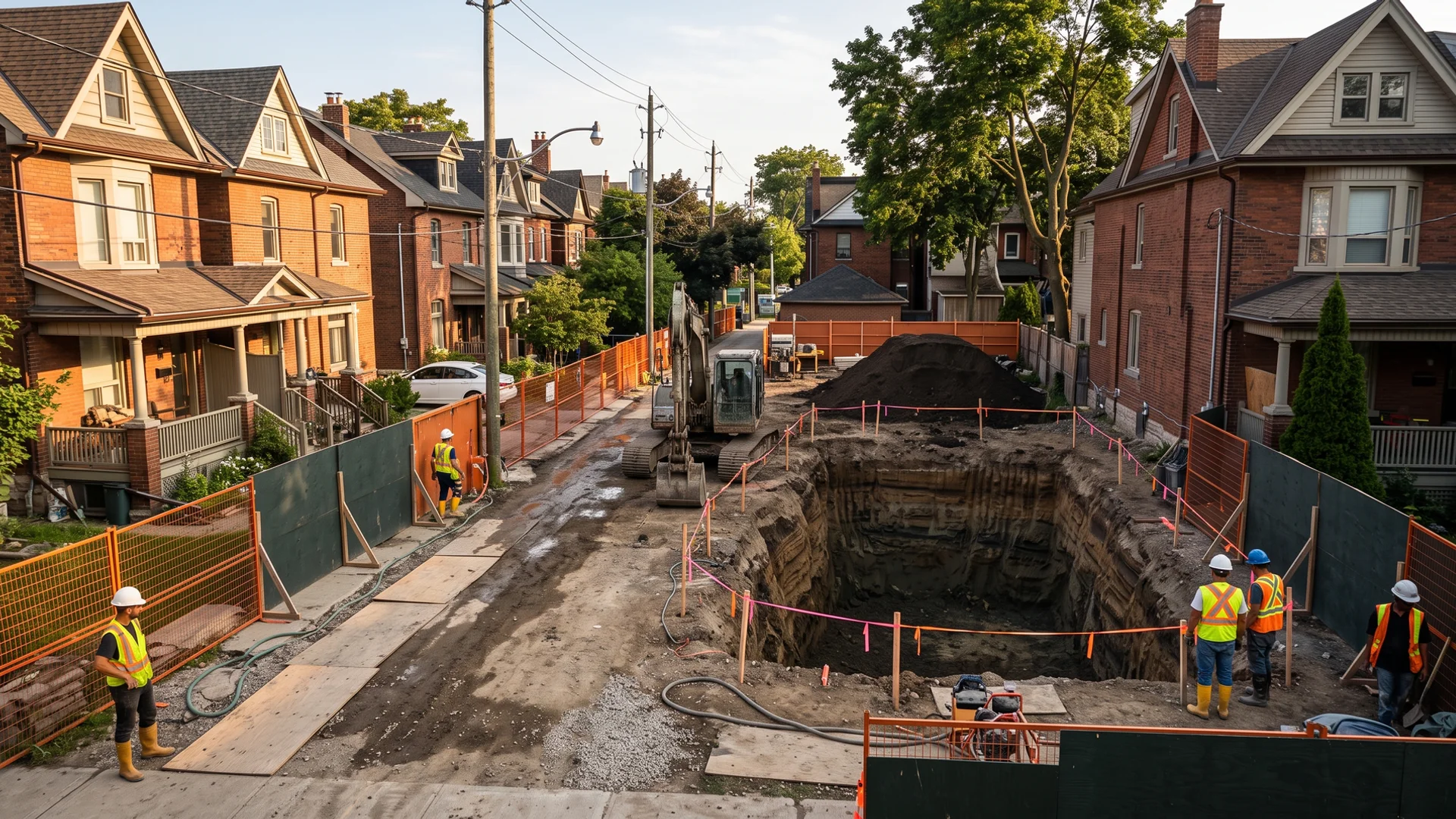
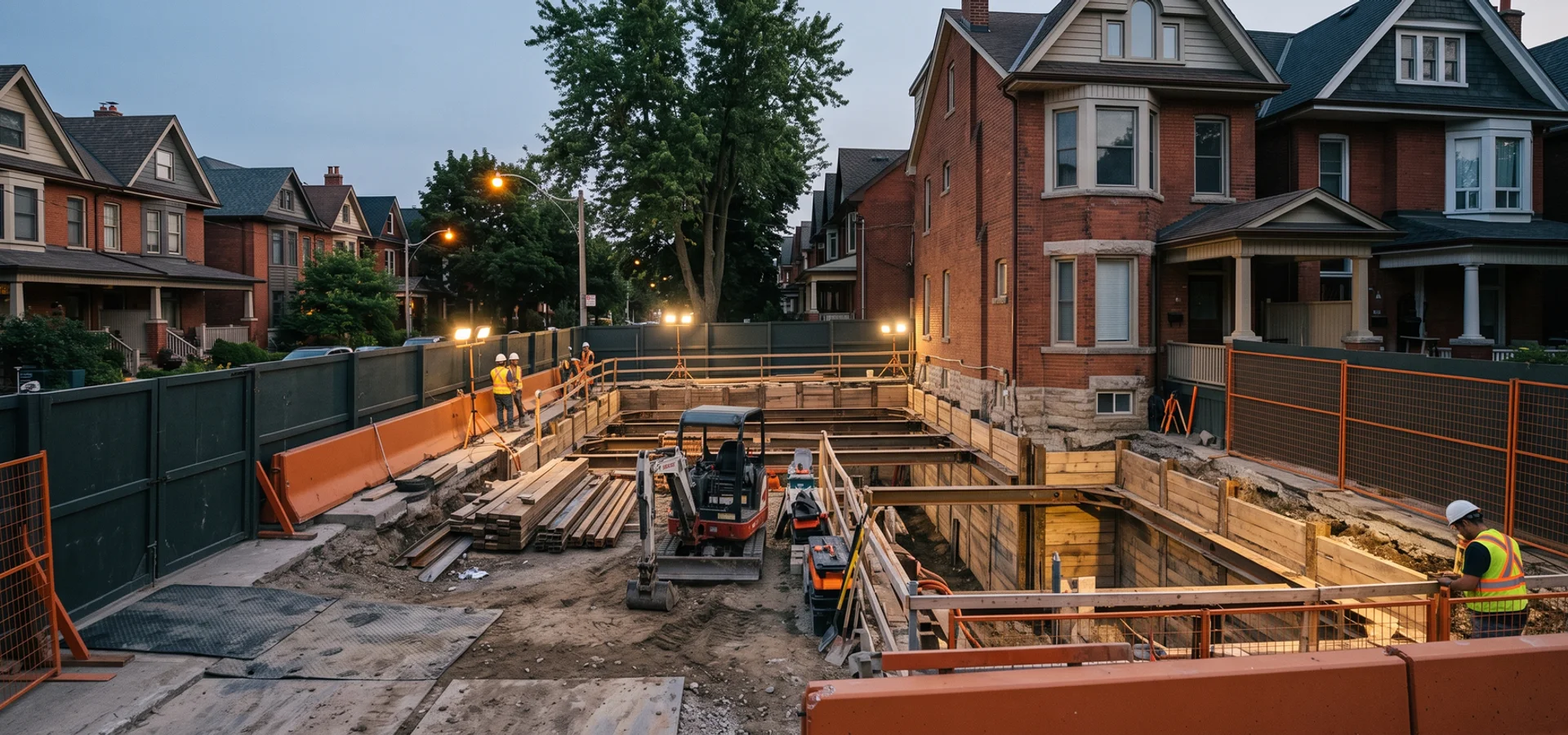
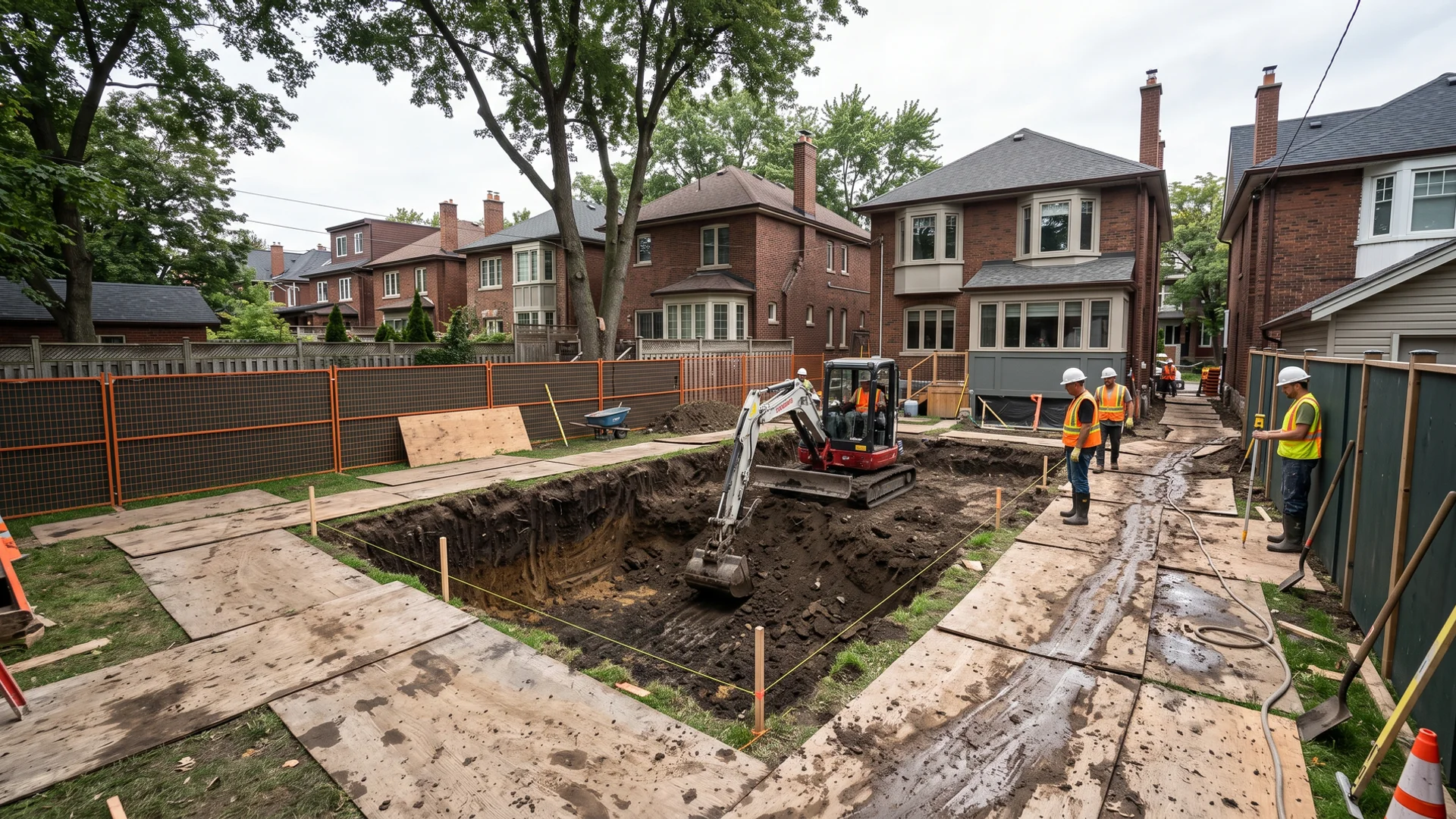
Residential excavation is the digging work around a home that is not a basement dig-out or a new foundation. In Toronto that usually means a pool, a driveway, a retaining wall, a garden suite pad or a backyard that needs regrading. These jobs are smaller than the underpinning and industrial excavation work we are known for, but they carry the same risks: buried utilities, tight access, protected trees and soil that has to go somewhere legal.
We take these jobs because homeowners, pool companies and landscapers kept telling us the same story. The small excavator showed up late, dug without locates, left a pile of clay on the lawn for a week and cracked the walkway on the way out. Our process is the same on a $6K driveway as it is on a $1M warehouse pad.
The Residential Digs We Do
Pool excavation
We dig in-ground pool holes to the installer’s layout and depth, then haul the soil away the same day. Pools are the most common residential job for a reason: Toronto backyards are deep and narrow, and getting 100 cubic metres of soil out through a side yard takes the right equipment.
Driveway excavation and base
A failing driveway is usually a base problem. We excavate to firm subgrade, place Granular A or B in lifts and compact each lift, so the paving or interlock on top does not sink and crack. Where the work touches the city boulevard, we follow the City’s requirements.
Retaining walls and garden suite footings
Sloped Toronto lots, especially near ravines in North York and Scarborough, need retaining walls. We dig the footing trench, install drainage stone and pipe, and backfill behind the wall. For garden suites and studios we dig pads and footings to the permit drawings.
Backyard grading and drainage
Water that flows toward the house ends up in the basement. We regrade yards, cut swales, and install French drains or dry wells so water goes somewhere useful.
Locates, Trees and Permits
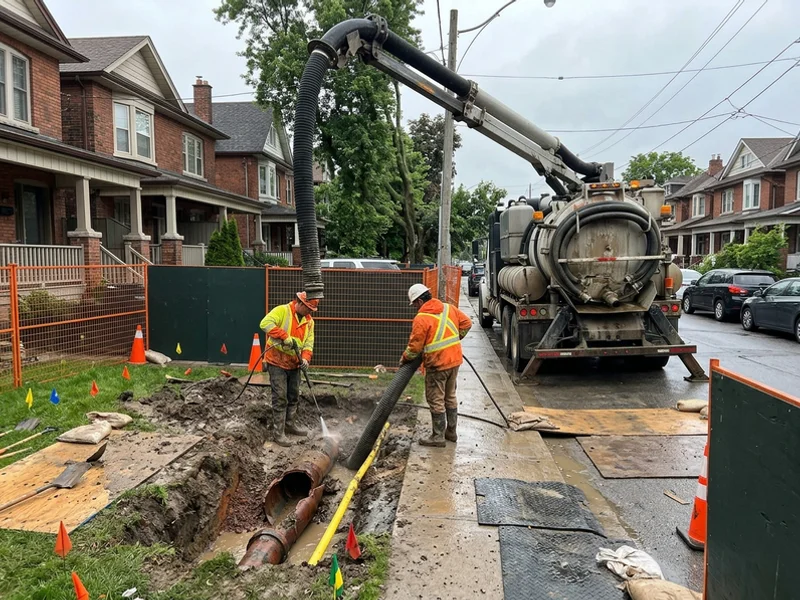
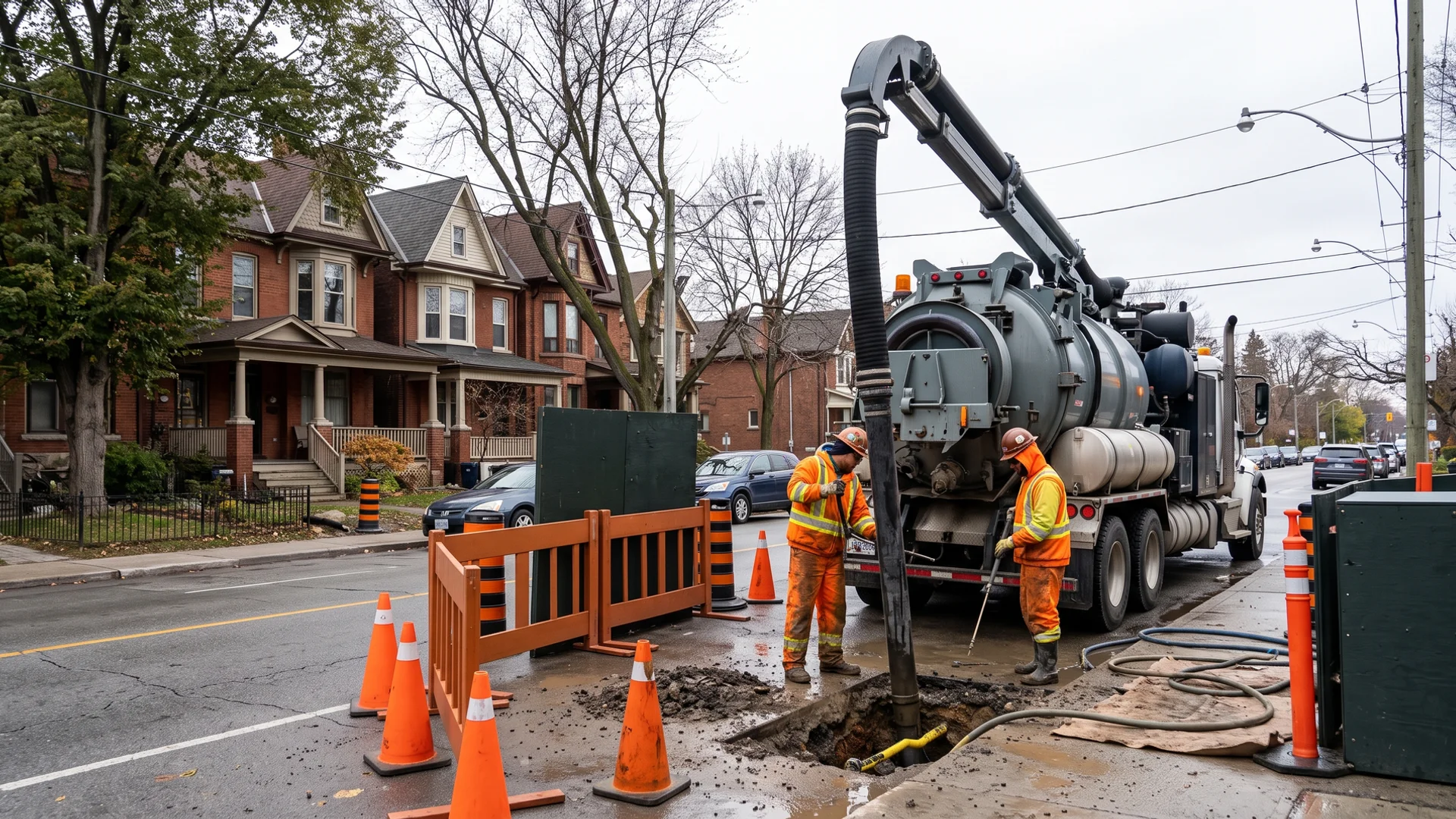
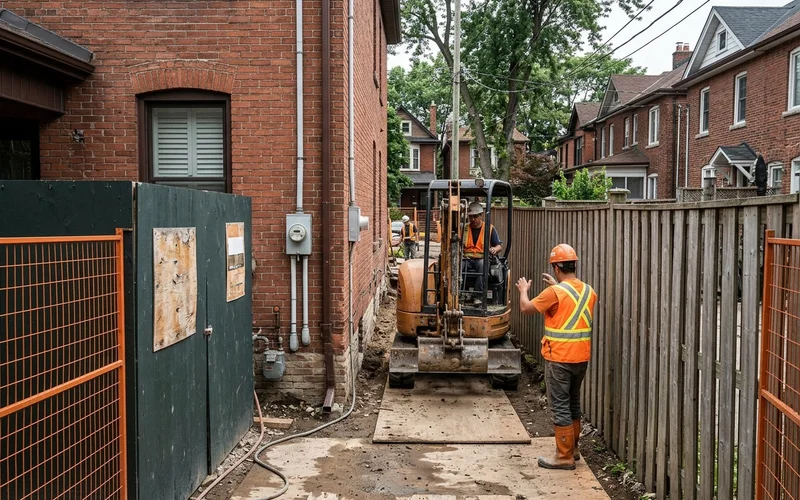
Utilities. Ontario One Call locates are required by law before any excavation. In Toronto, gas services often run just under the lawn, and cable lines can be inches deep. Marks are approximate, and private lines such as a garage feed or a sprinkler main are not marked at all. We daylight lines near the dig with our own hydrovac truck before the bucket goes in.
Trees. The Toronto Tree Protection By-law covers city trees and many private trees over a set diameter. Damaging roots can bring fines and replacement costs. We set up hoarding, dig carefully near roots and help you get permits when needed.
Permits. Pools need a pool enclosure permit for the fence. Garden suites need a building permit. Retaining walls over about 1 m may need engineering. We tell you which apply at the site visit.
| Project | Usual permits or approvals | Typical time on site |
|---|---|---|
| Pool excavation | Pool enclosure permit, locates | 1-3 days |
| Driveway base | Locates, boulevard approval if widening | 1-2 days |
| Retaining wall footing | Locates, engineering if over about 1 m | 1-2 days |
| Garden suite pad | Building permit, locates, tree review | 2-4 days |
| Backyard grading | Locates, tree review near roots | 1-3 days |
Why Small Digs Go Wrong
Most residential excavation problems come from rushing: no locates, no plan for the soil, the wrong machine for the access. A gas strike on a pool dig can mean evacuating the street, a five-figure repair bill and fines. A clay stockpile left on a lawn for a week kills the grass and blocks the driveway. A heavy machine in a narrow yard cracks walkways and foundations. We avoid all three by planning before we arrive and sending the right size of equipment.
Bigger Than a Backyard?
If your project is a full basement, a new house or a commercial pad, see our basement excavation, foundation excavation or site preparation pages. For anything else, book a free site visit and we will quote in writing within 24 hours.